


Instant Cash Advance
4.658.00 Reviews
App Specs
- Version
- 1.7.4
- Updated On
- License
- Free
- Downloads
- 10,000+
- Developer
- Janssen Herman
- Categories
- Finance
- Platform
- Android
Screenshots
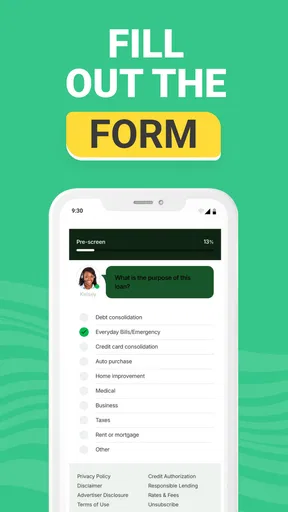
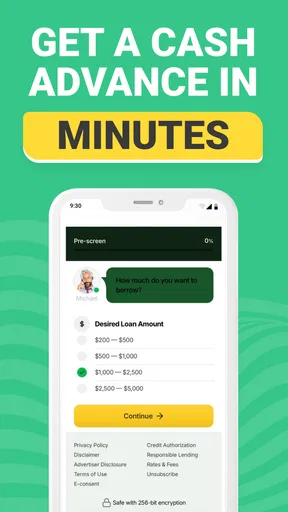


 Analysis by AppCompare
When I look at a finance app built around getting money quickly, I judge it less by its promise and more by what that promise means during an ordinary cash shortage. Instant Cash Advance is designed for that narrow moment: you need access to funds and want to manage the request from your phone rather than begin with a traditional bank visit. After spending time with it, my view is that its appeal comes from focus. It is not trying to be a full budgeting suite, investment dashboard, or everyday banking replacement. Its purpose is much more specific, and that makes it potentially useful for the right borrower while making it a poor fit for anyone looking for broader financial control.
The app is a free finance application from Janssen Herman, available for Everyone and compatible with devices running Android 6.0 or later. It reached the store on August 17, 2023, and the current version is 1.7.4. Those details matter because this is the kind of tool people may open under pressure, when a confusing interface or an old phone can become a real obstacle. The practical question is not simply whether it offers a cash advance, but whether its focused approach helps you make a careful decision before accepting one.
Its public reception is encouraging without being a reason to switch off your judgment: it holds a 4.6 average from around 1.9 thousand ratings, with more than 10 thousand installs. I read that as evidence that the basic idea has found an audience, not as proof that every request will suit every person. A borrowing app can be convenient and still be expensive, unsuitable for a particular emergency, or less useful than an existing bank facility.
What the cash-advance focus really changes
The central capability is speed of access to a potential short-term advance. In practice, that changes the first step of borrowing. Instead of starting with a branch appointment or a long conversation with a bank representative, you begin inside a mobile workflow. For someone facing a small timing gap between an expense and their next income, that convenience can be meaningful. It lets you investigate an option when the problem occurs, rather than waiting until normal office hours.
That convenience should not be confused with free money or guaranteed approval. A cash advance is still a financial commitment, and the app should be treated as a place to review an offer, not as a reason to accept one automatically. My strongest recommendation is to separate the urgency of the expense from the quality of the borrowing terms. The first may be immediate; the second deserves a pause.
The focused design also affects who will enjoy using it. If your only goal is to explore access to short-term funds, a dedicated app can feel more direct than a general-purpose banking application filled with account balances, transfers, cards, and savings tools. If you want to track spending, build a repayment plan, or compare several types of credit in one place, this narrow purpose may leave you wanting more.
I would approach the app with a simple rule: use it to understand whether an advance fits the situation, then make the repayment plan before making the request. That small change in sequence is important. Many people calculate whether they can receive money but forget to calculate how the next repayment affects rent, food, transport, or other fixed commitments.
Worth Reading Before You Choose

Flipboard Shows What News Apps Must Do Beyond the Feed

Switching to Android Auto Means Rethinking Your Driving Routine

Google Calendar Makes a Crowded Week Easier to Manage

Ludo King Makes the Most of the Minutes Between Plans

Baby Panda World Brings Quick Play to Modern Phones, but Its Game Library Feels Busy

ESPN’s Live Game View Makes Following Close Games Easier
How I would approach the first session
On a first visit, I would begin by reading every screen slowly instead of tapping through the process just to reach the end. Look for the amount you would receive, the total amount you would repay, the repayment timing, and any applicable charges or conditions shown during the application. I would also check that the personal details entered are accurate. A typo in contact or income information can create avoidable friction when a financial request is being reviewed.
I would keep the requested amount as close as possible to the actual shortfall. This is one of the less obvious disciplines with a cash-advance tool: the maximum amount that appears available is not necessarily the sensible amount to take. Borrowing extra because it is offered can turn a manageable gap into a repayment problem. The app’s speed is most valuable when it helps solve a defined need, not when it encourages a larger decision than you planned.
Before confirming anything, I would take a screenshot or write down the important figures displayed in the final review stage for my own records. I would not rely on memory, especially if I were applying while distracted. If the app presents terms that I cannot explain in plain language, I would stop and seek clarification rather than treating uncertainty as a minor inconvenience.
Another practical tip is to use a stable connection and complete the process when you can concentrate. A finance request is not a good task to rush through while commuting or handling a stressful phone call. If the process pauses, I would avoid submitting repeated applications without first checking whether the earlier attempt was received. Duplicate actions can make an already confusing situation harder to understand.
What using it in an everyday emergency feels like
Imagine a routine household bill arrives a few days before your next paycheck, and your account balance is temporarily short. With a traditional option, you might need to wait for a bank’s opening hours, call support, or move money from another account. A mobile cash-advance app can make the initial exploration faster: you open it, review the available path, enter the requested information, and assess whether the resulting repayment fits your next income.
The important word in that scenario is “assess.” The useful outcome is not simply receiving money quickly. It is being able to decide quickly with enough information. If the terms fit your budget and the expense is genuinely time-sensitive, the app’s focused workflow may reduce stress. If the repayment would leave you short again before the following income arrives, the same speed becomes a warning sign rather than a benefit.
I would also consider alternatives before submitting. An employer advance, an existing overdraft facility, a payment extension from the bill provider, or help from a trusted person may have different costs and consequences. None of those options is automatically better, but comparing them takes only a few minutes and can prevent a short-term solution from becoming a repeated cycle.
Where the app is more useful than usual alternatives
The clearest advantage over a branch-based loan process is accessibility. You can begin from a phone, which is valuable for people who work irregular hours, live far from a branch, or prefer not to discuss a small emergency face to face. Compared with a general bank app, the dedicated purpose may also make the route easier to understand because the experience is centered on the advance rather than surrounded by unrelated account features.
Compared with borrowing from a credit card, the app may feel more deliberate because the request is presented as a separate decision rather than an amount quietly added to an existing balance. That separation can help you notice that you are borrowing. However, it does not automatically make the cost lower or the repayment easier. I would compare the full obligation, not the appearance of the interface.
Compared with informal borrowing, the app offers a more structured digital process. That can be preferable when you want a clear record and do not want to mix money with a friendship. The trade-off is that a formal financial commitment may be less flexible than an arrangement with someone you trust. Again, the right choice depends on the terms and on your ability to repay them comfortably.
The trade-offs hidden behind convenience
The biggest limitation is built into the product’s purpose: it addresses a short-term cash gap, not the reason the gap exists. If your income regularly falls short of your essential expenses, repeated advances will not solve the underlying problem. They may simply move the pressure forward. In that situation, I would favor a budgeting review, a conversation with creditors, or professional debt advice over using the app as a recurring income supplement.
There is also a psychological trade-off. A fast mobile flow reduces friction, which is helpful when time matters, but friction sometimes gives people a useful moment to reconsider. Because the process is convenient, I would create my own pause by writing down the repayment amount and the exact source of the money that will cover it. If I cannot name that source without relying on another advance, I would not proceed.
Another limitation is scope. This is not the app I would choose for monitoring several bank accounts, categorizing spending, setting long-term savings goals, or learning how to improve my credit habits. A personal finance app or the tools provided by my bank would be better for those tasks. The focused approach is a strength only when the task itself is focused.
I would also avoid assuming that a positive rating guarantees a smooth experience for my particular circumstances. People have different income patterns, banking arrangements, and tolerance for repayment obligations. A high average can tell me that many users found value in the app, but it cannot decide whether a specific advance is affordable for me. That decision belongs to my budget and the terms shown on my screen.
Small habits that make the workflow safer
My first habit would be to calculate the gap before opening the app. If the bill is a known amount, I would subtract the money already available and request only what is needed, allowing for any clearly displayed cost. This prevents the emotional pressure of the application screen from determining the amount.
My second habit would be to plan the repayment in the same calendar where I track bills and income. Marking the date beside rent, utilities, subscriptions, and transport costs reveals conflicts that are easy to miss when looking only at today’s balance. A cash advance can appear affordable in isolation and become uncomfortable when combined with several ordinary obligations.
My third habit would be to review the app after the emergency has passed. If I used it because an expense was unexpected, I would ask what could reduce the chance of repeating the situation: a small emergency reserve, a bill-date change, a cancellation of an unused subscription, or a conversation about payment timing. The app is most helpful as a temporary bridge, not as a permanent part of monthly income.
For privacy and account safety, I would install the application only from the official store, keep my device protected, and avoid entering financial details on public Wi-Fi. I would read the permissions and consent screens presented during use rather than approving everything automatically. Those are not special tricks for this product; they are sensible precautions whenever a phone app handles sensitive financial information.
Who gains the most from this focused tool
I think the strongest audience is someone with a temporary, clearly understood shortfall, a dependable source of repayment, and enough financial discipline to compare the complete obligation before accepting it. That person benefits from the app’s mobile access and narrow purpose without mistaking convenience for affordability.
It may also suit someone who has limited access to branch banking or needs to investigate an option outside normal working hours. The fact that it is free to install lowers the barrier to exploring the workflow, although the borrowing decision itself still needs careful attention to the terms presented. Free access to an app should never be read as free credit.
I would skip it if I needed a long-term loan, a detailed money-management system, or a way to repair a recurring deficit. I would also look elsewhere if my bank already offers a transparent, affordable emergency facility that I understand well. Existing options can be easier to manage because they sit beside the rest of my accounts, and a familiar provider may make repayment tracking simpler.
People who dislike reading financial conditions, regularly miss due dates, or would need another loan to repay this one should be especially cautious. The app’s main benefit is speed, but speed cannot compensate for an unaffordable commitment. In those cases, delaying the application and seeking a payment extension or independent advice is the more responsible choice.
My overall view after weighing the capability
Instant Cash Advance succeeds when I judge it as a focused access point for a possible short-term advance rather than as a complete financial companion. Its value is practical: it puts the initial borrowing process on a phone and may help a user investigate funds during a time-sensitive situation. The experience is most convincing when the need is temporary, the amount is modest, and repayment is already mapped out.
My reservation is equally clear. An easy application can make borrowing feel simpler than it really is. I would never use the app as a substitute for a budget, and I would not choose it merely because money is available. I would compare the displayed obligation with my bank’s alternatives, payment extensions, and other realistic options, then proceed only if the repayment leaves my essentials protected.
For a person who needs a dedicated cash-advance route and can make a calm, informed decision, this free Everyone-rated finance app from Janssen Herman is worth considering. Its current version, 1.7.4, supports a relatively broad range of older Android devices, including those on Android 6.0 or later, which makes the basic access proposition practical for many phone users. For anyone seeking deeper financial planning or relief from ongoing money problems, a different kind of tool will be more useful.
In the end, I would recommend it with a condition: use the speed to gather information, not to skip the decision. If the advance solves one defined timing problem and the repayment is comfortably covered, the app’s focused capability can be genuinely helpful. If it only postpones a larger shortfall, the most useful action is to close the application and address the wider budget instead.
Pros
- Fast access to short-term funds after approval.
- Simple application process with minimal paperwork.
- Useful for handling unexpected expenses or emergencies.
- Clear repayment schedule helps plan upcoming payments.
- Available through a convenient mobile experience.
Cons
- High fees or interest may make borrowing expensive.
- Loan approval and terms can vary by applicant.
- Late payments may lead to extra charges or penalties.
- Short repayment periods can strain a limited budget.
- Availability may be restricted by location or eligibility.
FAQs for Instant Cash Advance
What is Instant Cash Advance, and how does it work?
Instant Cash Advance is a financial service or app designed to help eligible users request a short-term cash advance before their next payday. After creating an account, you generally provide personal, employment, and banking information so the service can assess eligibility. If approved, the money may be deposited into your linked bank account, although approval times, limits, and delivery speed can vary.
Is Instant Cash Advance available to everyone?
No. Availability usually depends on factors such as your age, country or state of residence, regular income, active bank account, identity verification, and the provider’s lending criteria. Some users may also need to receive recurring direct deposits or meet minimum income requirements. Before downloading or applying, review the eligibility rules carefully because submitting an application does not guarantee approval.
How much does Instant Cash Advance cost?
The total cost can depend on the provider, the amount borrowed, repayment date, optional expedited-transfer fees, membership charges, and any applicable interest or finance fees. Carefully read the fee schedule and annual percentage rate, where provided, before accepting an offer. A cash advance can become expensive if it is renewed, extended, or repaid late, so compare the full repayment amount with the amount received.
When will I receive the money, and how is repayment handled?
Standard deposits may arrive according to your bank’s processing schedule, while faster delivery may involve an additional fee. Repayment is commonly scheduled for your next payday or another agreed date and may be collected automatically from your linked bank account. Make sure sufficient funds are available, and check the repayment terms for late fees, failed-payment charges, extensions, or other consequences.
Is Instant Cash Advance safe to use?
Use caution and verify that you are dealing with the official app or website before entering sensitive information. Check the developer or provider name, privacy policy, permissions, customer support details, licensing information, and user reviews. Never share your banking password, verification codes, or account credentials through unofficial messages. Also remember that a cash advance is a financial product, not free money, and should be used only after understanding the repayment obligation.


